


After a long day, cooking is easier when you do not first have to reorganise the kitchen. Yet containers are mixed up, the worktop is full and the lid you need has disappeared. Useful preparation starts with less searching rather than simply cooking more. This guide connects a realistic weekly plan with clear work surfaces, appropriate storage and an easy reset, so each new tool has a specific role.
Plan around the days with least time
Look at the coming week and identify the evenings when cooking will be difficult. You do not need to schedule every meal. Begin with two or three pressure points and decide what would actually help: a shopping list, prepared ingredients or a suitable dish made ahead.
Check the fridge, freezer and cupboards before shopping. Note what is already open and what should be used first. Planning around those ingredients is more useful than adding another unrelated collection. The aim is preparation you will use, rather than extra work and more full containers to manage.
Clear one preparation area
Choose a worktop area where you can chop, mix and put down a bowl. Anything permanently occupying it should have a clear daily job. Move occasional equipment elsewhere. Test the space with the largest board and bowl you regularly use rather than judging an empty surface.
Arrange tools in the order of your actions: collect, wash, prepare, cook and clear away. Make waste disposal reachable without carrying a loaded chopping board across the room. Extra storage helps only when it genuinely protects this working area rather than becoming another obstruction.
Match containers to portions and shelf space
Compare the amounts you normally store with container sizes. One large dish is not right for every lunch, while many small boxes can mean extra washing and loose lids. Measure fridge shelf height and storage space, including lid edges and the way the containers stack.
The glass meal-prep set is one option to examine. Check oven, microwave, freezer and dishwasher suitability separately, including any limits. Do not assume that lids can withstand everything the glass dishes can. A set is useful only if its range of sizes matches the portions you actually prepare.
Give each tool a defined task
A mandoline may be relevant if you regularly repeat the same slicing task. Check which accessories you will use and where they will be stored. Follow the instructions and use the prescribed protection. Equipment that is awkward to clean may stay in the cupboard on the busiest evenings.
A rotating serving platform has another role: making appropriate items easier to reach on a table or inside a suitable cupboard. Check the diameter and the clearance needed to rotate it when loaded. Group things used together rather than filling every available surface with unrelated objects.
Connect preparation with careful food storage
An organised kitchen does not automatically make food last longer. Follow packaging instructions and official advice for the particular meal. The Dutch Nutrition Centre advises cooling cooked leftovers promptly and placing them covered in the fridge or freezer within two hours. Label containers with a clear date.
Do not plan an entire week of refrigerated meals without checking storage guidance. Consult the current official advice or storage guide. Keep raw products separate from prepared food and use clean equipment. Containers support organisation; they do not replace appropriate cooling and storage practices.
Make resetting as straightforward as preparing
Look at where cutlery, lids and tools go after washing. If a drawer is always overfilled, first decide what needs to be there every day. A large cutlery set also needs appropriate storage. Count what you use before adding more pieces to an already crowded drawer.
A three-compartment waste bin may suit a household separating different waste streams. Compare each compartment’s capacity with local collection rules and the amount you produce. Leave room to remove inner containers or bags. Clearing up should not require moving another piece of furniture first.
Use a manageable weekly check
Finish with five questions: have you identified the busiest days, cleared the work area, found suitable containers, checked what to use first and made cleaning manageable? This short check can be more useful than a detailed schedule that becomes unrealistic after two days.
After a week, review what you really used. Did a slicing tool help or did you prefer your existing knife? Were all the containers needed? Adjust the routine accordingly. A good kitchen arrangement remains understandable on an ordinary busy evening and supports the work you already need to do.
Product ideas for your situation
Choose what suits your space and intended use. Check the product page for the current version, price and availability. Lifestyle photographs may include extra styling; check what is supplied with the item.

Glass meal-prep containers, set of ten
Compare the sizes with portions and fridge shelves. Check conditions for containers and lids separately.
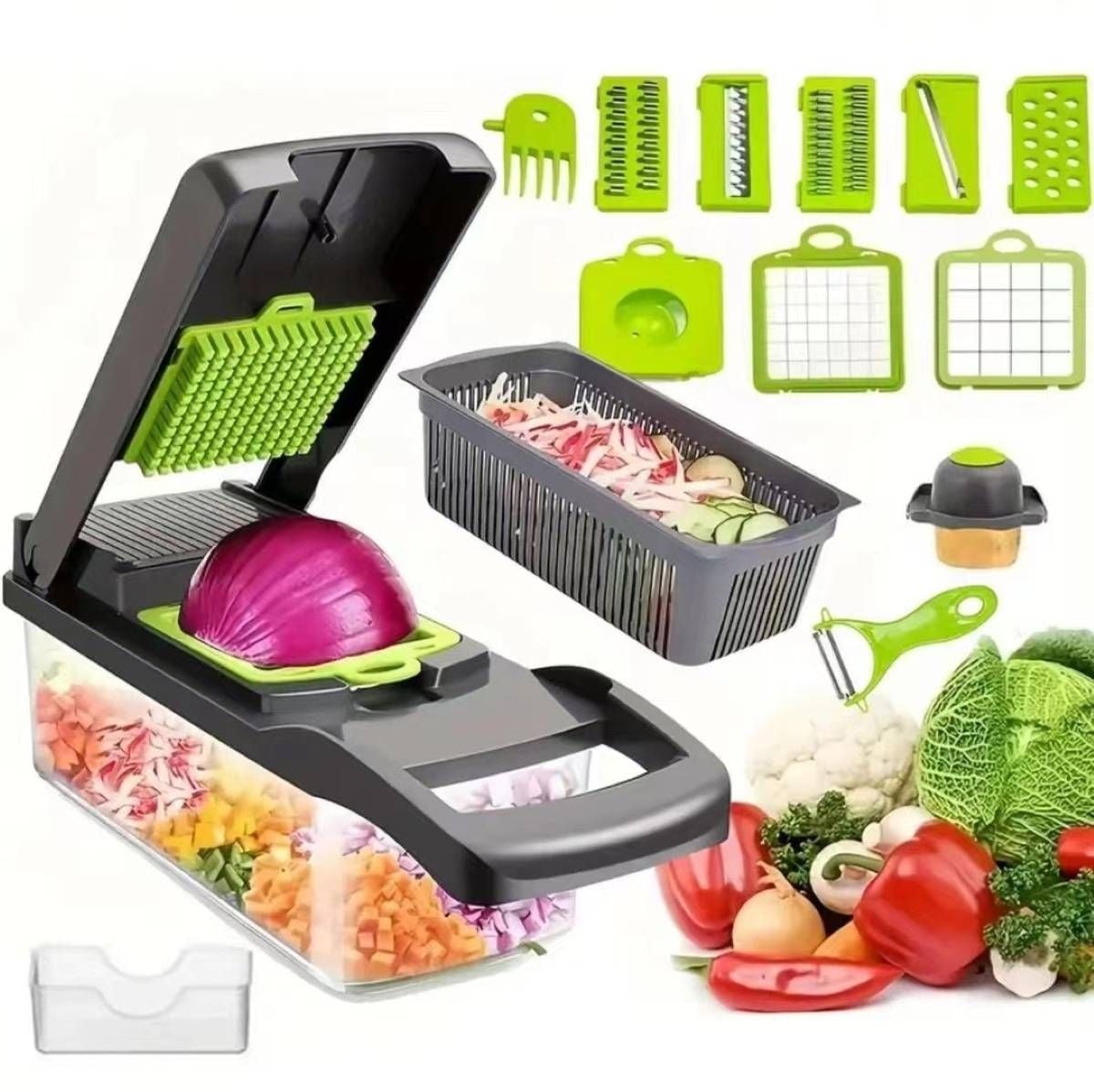
Mandoline and vegetable slicer, sixteen pieces
For repeated vegetable preparation tasks. Review accessories, cleaning and the prescribed protective equipment.

Bamboo Lazy Susan, 40 cm diameter
For organising suitable items within reach. Measure the clearance so it can rotate when loaded.

Stainless-steel cutlery set, sixty pieces
Useful if you actually lack cutlery. Check the set contents and available drawer space.

Waste-separation bin, three 15-litre compartments
For separated waste streams where the division fits the household. Allow room to remove bags or inner bins.
Frequently asked questions
Do I need to cook for the whole week?
No. Start with the busiest days and a manageable task. Always check safe storage guidance when cooking ahead.
How many containers do I need?
Count the portions you store at once and assess available space. Different sizes help only if you use them.
Can the lid go in the oven too?
That cannot be inferred from the container material. Check the lid and container instructions separately.
What frees space first?
Clear one preparation area and relocate rarely used items. You can then see what is actually missing.


Comments (0)