


Would you like to read, have breakfast or occasionally use a laptop in bed, but are unsure which table is practical? A large top can block movement; a table that is too low or unstable can be awkward. Start with your routine, then measure the bed, mattress, floor and reach.
Decide what the table needs to do
List your uses: book and glasses, breakfast, laptop or several things at once. This determines the surface area and how often you will move it. A large top may be unnecessary for a cup of tea; a laptop needs room for both the device and your hands.
Product photographs may show accessories that are not included. Check the package contents, stated load capacity and material on the product page. Use the item as described by its maker.
Measure mattress, bed edge and floor
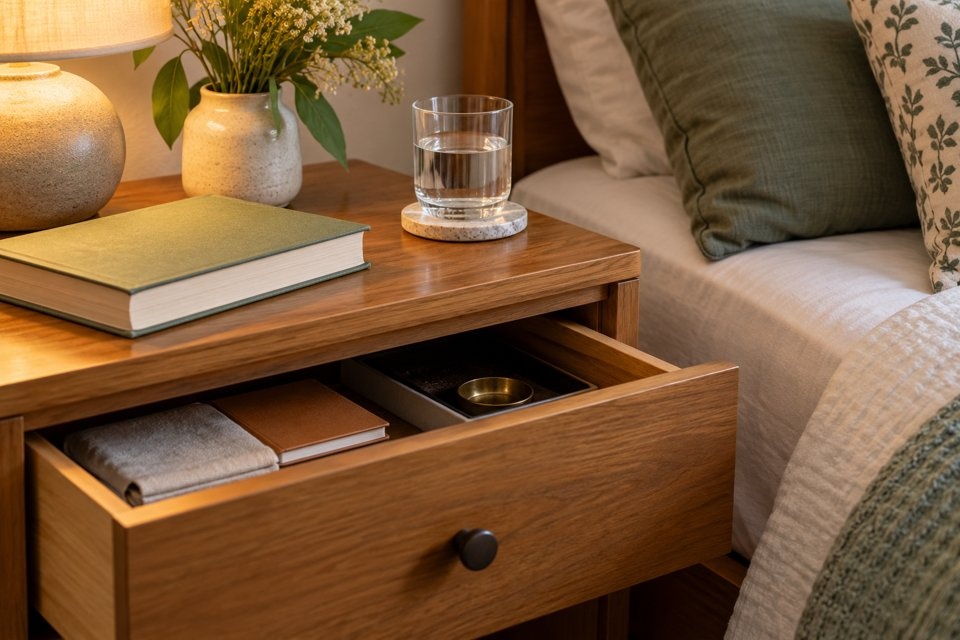
Measure from the floor to the top of the mattress, including any topper. Note the free space beside or over the bed and how far the table can move. For a base that slides under the bed, the clearance under the frame and edge is critical.
Check bed legs, drawers, skirting boards, radiators and walls. A base may meet an obstruction even if it appears to fit. Use a paper template or boxes to test its footprint and route.
Balance adjustability and stability
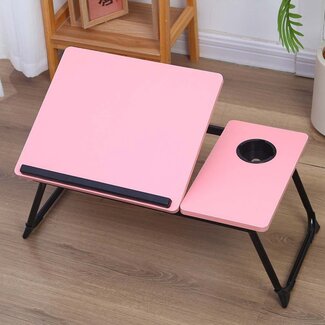
An adjustable top may help if you change position or tasks. Check how it adjusts and whether its stated height suits your bed. Adjustability does not automatically make a table stable on every surface.
Check construction, base width, wheels and brakes if fitted. See whether wheels lock and how the surface should be cleaned. Do not exceed the maker’s stated load or apply unlisted edge loads.
Keep a comfortable route clear
Test whether you can get in and out of bed without constantly moving the table. Keep cables, glassware and hot drinks positioned to avoid knocking them over. A bedside table should not block the walking route.
If using the top over the bed, follow the stated instructions and load limit. A laptop can heat up on a bed; do not cover its ventilation openings. When unsure, use a suitable hard surface.
Choose the right dimensions
Compare the full width and depth with the available space, not just the top. Check how much room the base takes and the height at which you will use it. A smaller top may be preferable if it rolls away or stores easily.
Review current product specifications and measure again before ordering. Check whether the listed dimensions refer to the top, base or complete item. This helps avoid delivery surprises.
Fit the table into your routine
A table used every day should be easy to move away afterwards. Decide where it will be stored and whether it fits through the door and hallway. For wheels, check the floor surface and clear the route.
Compare types by task, size and room. Review the product details and ask for missing dimensions. A good choice feels natural in daily use and stays out of the way when you do not need it.
Frequently asked questions
Can every bed table slide over a mattress?
No. Measure the frame and bed edge and check the base and product dimensions.
Is an adjustable table always more stable?
No. Adjustability and stability are different properties. Check construction, load limit and instructions.
Can I use a laptop in bed?
Follow device and table instructions and do not cover vents. A hard surface helps air circulate.





Comments (0)