


You push the duvet away, pull it back a little later and wonder whether you need a new cover, a flat sheet or an entirely different duvet. Start with the way your bed is built. A cover is only one layer. Looking at each part separately helps you make a more useful choice than ordering a whole set that ends up feeling much like the one you already own.
1. Write down every layer
List your mattress, any topper, protective layer, fitted sheet, nightwear, duvet and cover, plus any throw. Note which pieces stay on the bed all year. A decorative throw can easily become another sleeping layer even though you originally bought it for the look.
Ask whether the bed has always felt this way or whether the change followed a new duvet, protector or extra blanket. This simple inventory gives you a better starting point than a broad promise about a particular material. Keep the note beside you while comparing products.
2. Check the duvet before replacing the cover
A duvet cover does not replace the filling inside it. If the duvet itself feels too warm for you, changing the cover cannot resolve every part of that problem. Look for the duvet’s construction, intended season and any information about combining sections. Check whether both parts of an all-season duvet are still attached.
Read product types carefully when shopping. An empty cover, filled duvet, flat sheet and bedding bundle are different purchases. Compare contents, dimensions and care requirements before price. A low price for an unfilled cover cannot be compared directly with the price of a complete filled duvet.
3. Separate fibre, weave and finish
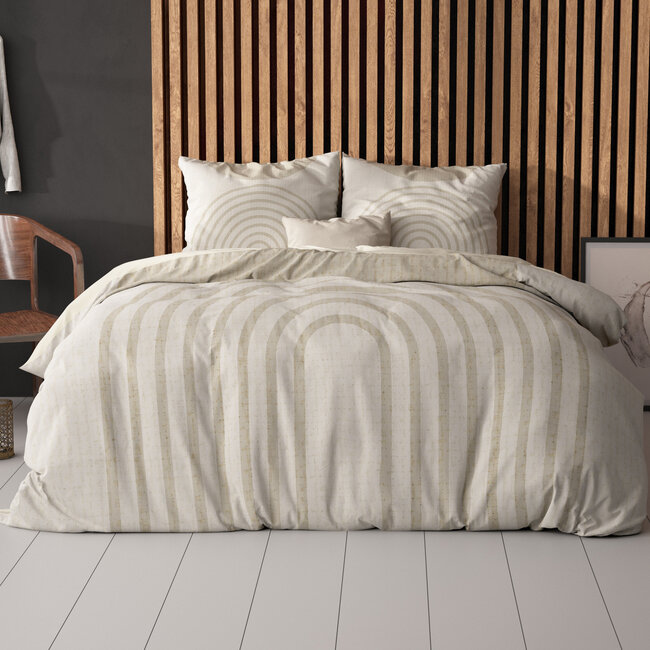
Cotton, polyester, viscose and lyocell describe fibres. Percale and sateen describe weaves, while jersey is knitted. A satin-like surface does not automatically mean silk. Neither the fibre name nor a photograph alone tells you the full thickness, finish or feel of the finished article.
IKEA describes percale as a matte cotton fabric with a fresh feel. That may be a useful starting point if you enjoy a crisp surface, but it does not guarantee a particular overnight temperature. Check the exact composition and consider whether you prefer a smooth, flexible or more structured feel.
4. Include the layers underneath you
The fitted sheet and protector matter to your comparison because you lie on them throughout the night. Note the composition and intended purpose of each one. A waterproof protective layer and a conventional absorbent mattress pad are not automatically interchangeable. Follow your mattress requirements as well as the textile instructions.
Do not remove needed protection casually. Start by adjusting a non-essential loose layer, such as a decorative throw. If you want to change a protector, check the mattress conditions and the replacement’s specifications first. Your test should remain appropriate for the bed you actually use.

5. Change one thing at a time
Remove an unnecessary extra layer while leaving the other elements much the same. Note the result. If you already own another suitable cover, try it with the same duvet next. Replacing the duvet, sheets and nightwear simultaneously makes it hard to identify the change that mattered.
Record room conditions too: a hot evening and a cooler night are not the same comparison. This approach helps you understand personal comfort preferences; it is not a medical test. Persistent or unexplained night-time symptoms deserve appropriate professional assessment rather than an assumption that bedding is the only cause.
6. Allow two sleepers different choices
If you share a bed but prefer different amounts of warmth, discuss which layers need to be adjustable for each person. Separate duvets can offer more individual choice than repeatedly changing one shared cover. Measure the bed and check cover sizes before ordering.
You do not necessarily need to replace everything. One person may want an additional loose throw while the other prefers the same base arrangement without it. Do not buy every accessory shown in a room photograph; choose the combination that fits the way you actually sleep.
7. Compare a short, relevant selection
Choose the product type first, then use size and material to narrow the range. Compare exact composition, finish, included pieces and washing instructions. Thread count alone is not a complete quality comparison and cannot replace your preference for a particular feel or your available laundry routine.
Write a brief buying note: the problem you want to address, the layer you plan to change, the exact dimensions and the care you can manage. If a specification is missing, send that note with the product name to customer service. It creates a clearer question than asking for one universally coolest fabric.
Before you buy
- Identify whether you need a cover, sheet or filled duvet.
- List your existing layers and test one change at a time.
- Check composition, size and care instructions.
- Avoid choosing solely by colour, thread count or a broad material claim.
Frequently asked questions
Is cotton sateen always warmer than percale?
Not for every finished article and every sleeper. Thickness, finish, the duvet itself and your preferences also matter.
Can I use a flat sheet instead of a duvet?
Some people prefer this in warm conditions. A sheet has no duvet filling; whether it is comfortable depends on you and the room.
Does bamboo guarantee cooler sleep?
No. Check the actual fibre composition and construction rather than treating the plant source as a comfort guarantee.
Do I need to replace my complete bedding set?
Not automatically. Identify the layer you want to change before deciding what to buy.





Comments (0)