


A towel seems clean when you take it out of the cupboard, yet the musty smell returns as soon as it gets wet. Before adding more fragrance, follow its journey through the laundry basket, washing machine, drying space and cupboard. This guide helps you identify the stage that needs attention, choose a manageable change and decide whether a different towel rack would actually help.
1. Identify when the smell returns
Check the same towel straight after washing, once completely dry and again after a day in storage. A smell already present at the end of the wash points you towards the washing process or machine maintenance. A towel that starts fresh but smells during drying calls for a closer look at airflow, spacing and the time it stays damp.
If the smell only appears in the cupboard, check the thick hems as well as the middle of the towel. Inspect the shelf too. Keeping these stages separate makes your next decision more useful than changing detergent, temperature and drying equipment all at once.
2. Let the care label set the limits
A cotton bath towel, a blended fabric and a towel with decorative finishing may need different treatment. Follow the individual care label rather than choosing a hotter programme for every item. Separate colours as instructed and check first-wash instructions before mixing new dark towels with pale ones.
Check the machine manual for the load allowed on the selected programme. A full-looking drum does not tell you whether the wash programme is suitable. Remove the towels when the cycle is finished as soon as practical instead of leaving a wet bundle in the machine overnight.

3. Measure detergent instead of guessing
Bosch identifies insufficient detergent as one possible reason for unpleasant laundry smells. This is not a reason to pour in extra product without checking. Follow the pack instructions for your load, soil level and local water hardness. If the machine has automatic dosing, use its instructions as well.
Visible residue or a slippery feel is a reason to review whether you have gone too far in the other direction. Consider leaving out fabric softener where appropriate: HEMA advises against it in its towel-care guidance to preserve absorbency. Avoid combining household remedies. Masking a smell is different from investigating it.
4. Give drying its own place in the routine
Shake towels out and spread them with space between adjacent pieces. Check the inside of a fold: it may still feel damp when the outside seems dry. Thick edges can also take longer than the central fabric. Choose a drying position where moisture can leave rather than wedging the rack between furniture.
If tumble drying is allowed, follow the permitted setting and your appliance instructions. A drying rack cannot correct an unsuitable wash, and a dryer cannot tell you whether the cupboard is damp. Treat each stage as a separate check and avoid storing towels just because they feel warm.
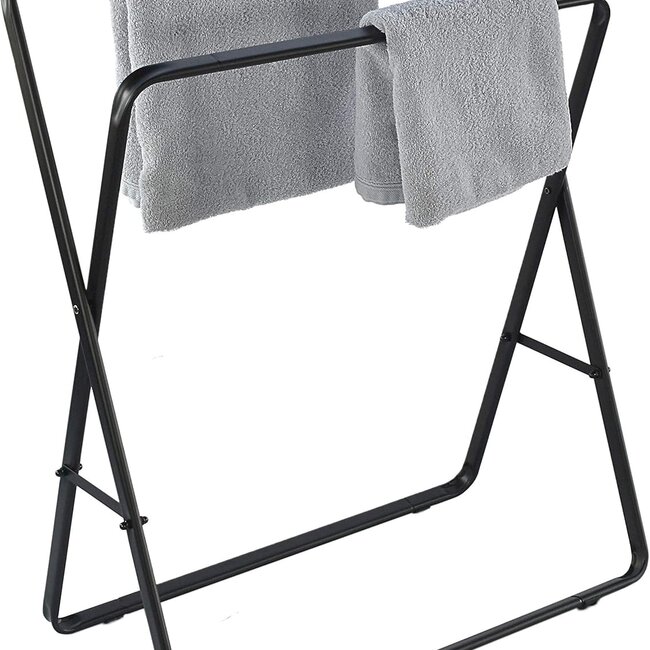
5. Choose a rack for real towels, not the photograph
Count how many wet towels need space after a normal morning. Measure their width as they actually hang. Three rails do not automatically mean three large towels can dry without touching. Look at usable rail length, spacing and the floor area left when doors open.
A folding rack may suit a bathroom that needs to be cleared between uses. A freestanding model needs a stable, suitable surface. Do not assume a decorative ladder or clothes valet is designed for wet fabric; read the stated use and material information. The linked photographs let you compare the actual items.
6. Separate damp laundry from clean storage
Let used towels dry in an appropriate position before collecting them for washing. Avoid leaving them tightly rolled inside a basket of otherwise dry clothes. Agree a simple household routine so the next person does not have to search an entire basket for the source of an odour.
Store clean towels only when all sections are dry. Rotate the stack instead of leaving the same pieces at the bottom for months. Check shelves when cleaning the cupboard and keep leaking cleaning products away from linen. These small checks are easier to maintain than repeatedly replacing towels.
7. Try one controlled laundry test
Choose two comparable towels. Note the programme, measured detergent and drying position. Wash within the care-label limits, follow the appliance maintenance instructions and hang the towels with enough separation. Check at the same three stages as before. On the next test, change just one relevant variable, such as the load size or rail spacing.
If several kinds of laundry keep developing the same smell, or the machine itself appears to be the source, follow the manufacturer’s maintenance advice and seek service advice where needed. Buying a new rack or towel set before locating the problem may leave you with the same routine and the same result.

Before ordering a towel rack
- Count the towels and measure their hanging width.
- Check rail spacing, floor space and door clearance.
- Read the stated use, materials and moisture guidance.
- Review the care label, detergent dose and drying routine.
Frequently asked questions
Why does a towel smell only when it gets wet?
The smell alone does not identify one definite cause. Compare it after washing, drying and storage to locate the stage worth investigating.
Should every towel be washed at 60°C?
No. Follow the individual care label; different fibres, finishes and colours can have different limits.
Will a new towel rack solve the smell?
It may improve a cramped drying arrangement. It will not fix unsuitable dosing, machine maintenance or damp storage.
Can slightly damp towels go into the cupboard?
Wait until the hems and folds are dry as well as the central area before stacking them.





Comments (0)