

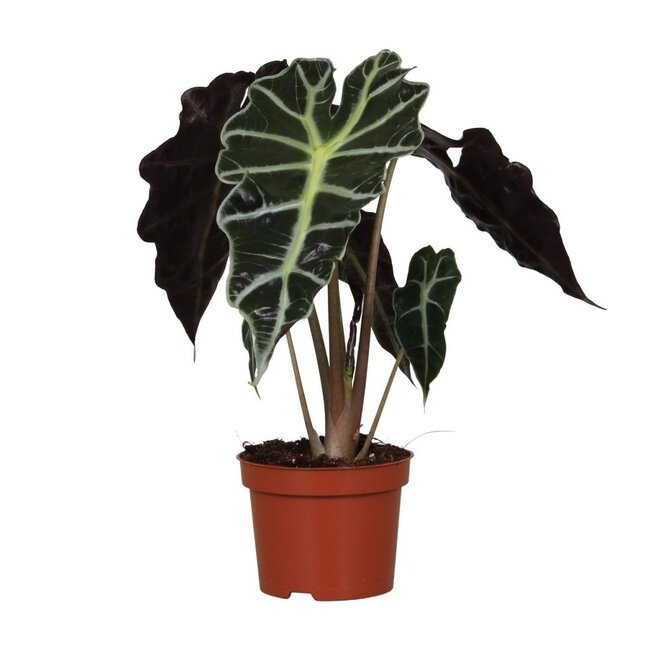
Alocasia Polly care: light, watering and yellow leaves
Give Alocasia Polly a warm spot with bright, indirect light and protection from cold draughts. Check the compost before watering. A yellow leaf does not automatically mean the plant needs a drink: first consider moisture, drainage and its location.
Alocasia x amazonica Polly has dark foliage with contrasting pale veins. Its appearance makes it easy to notice a change, but the useful question is what changed around the plant. Keep a few observations rather than watering every plant to the same timetable.
Find the right position
The RHS recommends bright indirect light, warmth above about 16 degrees Celsius and protection from draughts for alocasias. Strong summer sun can damage their leaves. Assess a possible position at different times of day, including when the room is being used.
- Is daylight reaching the leaves?
- Will direct sun reach that window later?
- Is an outside door frequently opened nearby?
- Could the foliage touch a cold pane or sit beside a radiator?
A photograph in the morning and another later in the day can make changes easier to compare. This is useful if the plant starts looking different after furniture has moved.
How often should you water?
Do not rely on a fixed weekday or a fixed volume alone. Check the compost, carefully lift the nursery pot and see whether water has collected inside the decorative pot. Allow excess water to drain away. Alocasia may need less water during its slower or dormant winter period.
Record the date and what the pot felt like after watering. Compare that with your next check. A reminder to inspect the plant is more useful than an instruction to water it regardless of the conditions.
Investigate yellow leaves in context
| Observation | Next check |
|---|---|
| One older lower leaf changes colour | Look at the rest of the plant and any new growth. |
| Several leaves turn yellow | Consider moisture, drainage, light and temperature together. |
| Wet compost and trapped water | Empty the outer pot instead of automatically adding more. |
| A change after moving the plant | Compare sunlight and draughts in both positions. |
RHS guidance lists several possible causes of yellowing in houseplants, including watering problems and unsuitable conditions. A single leaf photograph cannot confirm a diagnosis. Change one part of the routine at a time where possible, and keep notes.
A short inspection routine
- Look at both sides of the leaves.
- Check the compost and the bottom of the outer pot.
- Compare the position with your previous inspection.
- Take a photograph if the plant’s condition changes.
- Ask for advice if deterioration is rapid, including photographs of the whole plant and pot.
Frequently asked questions
Can Polly grow in a dark corner?
A dark corner is not a substitute for bright indirect light. Choose a location based on daylight, not decoration alone.
Is slower winter growth always a problem?
No. A quieter growth period can be normal, but do not dismiss rapid deterioration as winter rest without checking.
Is Alocasia safe around pets?
Alocasia is not edible and can be harmful or irritating if ingested. Keep it away from children and pets, and wear gloves when handling it.
Explore our Alocasia amazonica Polly, browse houseplants or compare plant pots using the nursery-pot size and the pot’s internal measurements.


