

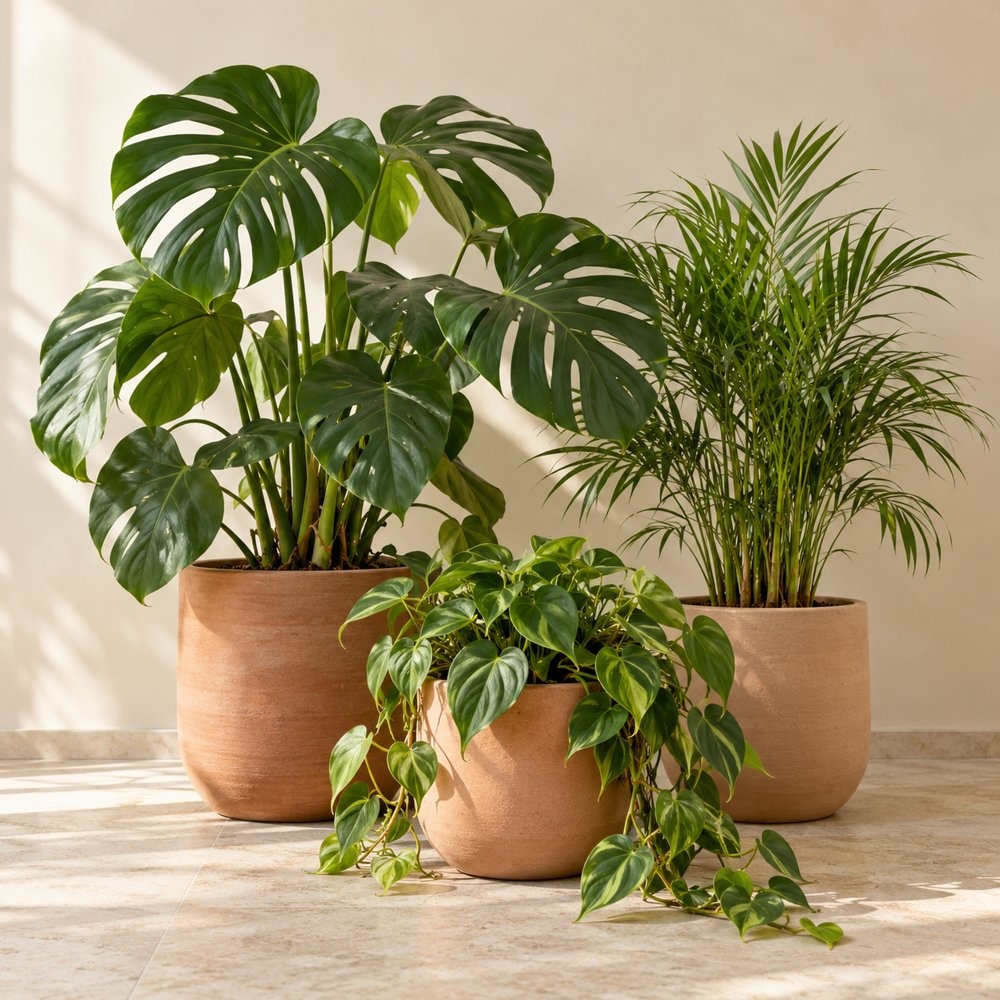
Houseplant winter care: watering, light and heating
Do not automatically water houseplants as often in winter as in summer. Reduced light can slow growth and water use. A warm position near a radiator may still dry differently from a cool windowsill, so inspect each plant and its compost individually.
Start by asking what changed in the room. Curtains may be closed more often, the heating may be on or furniture may be blocking the window. You do not need to move or repot every plant simply because the calendar has changed.
Check daylight where the leaves are
A plant beside a window can still sit behind a curtain or beneath a deep shelf. University of Minnesota Extension explains that plants in lower light grow more slowly and use less water. Match the position to the requirements of the species.
- Remove objects blocking daylight.
- Assess the spot with your curtains in their usual position.
- Check for cold glass before moving foliage closer to a window.
- If using a grow light, follow its positioning instructions and advice for the plant.
How often should you water in winter?
There is no schedule for every houseplant. Set a reminder to inspect, not an obligation to water. Feel the compost, compare the pot’s weight and check inside the outer pot. A moist rootball does not need a drink just because another week has passed.
Keep a simple note of the last watering date and what the compost felt like. Compare this at your next inspection instead of distributing the same fixed amount of water to every plant.
Separate heating, humidity and watering
Heated indoor air can be dry, which the RHS highlights as an issue for humidity-loving plants. Extra water in the compost is not automatically the answer. Air humidity and root-zone moisture are different things to assess.
| Location | Useful check |
|---|---|
| Near a radiator | Heat reaching the foliage and drying conditions. |
| Beside an outside door | Cold draughts when it opens. |
| On a windowsill | Both daylight and temperature near the glass. |
| Deeper in the room | Whether the species still receives suitable light. |
Feeding and repotting are separate decisions
Slower growth usually calls for less feeding. Follow species-specific advice and the fertiliser label; a winter-flowering or actively growing plant can need a different approach. Feeding is not a universal treatment for an unattractive leaf.
Before buying a bigger pot, decide why you want one. Are roots crowded, is the container damaged or do you simply want a different look? A cover pot may solve the last of these without disturbing the roots. Ask for advice on clear root problems rather than waiting for a particular month.
A five-minute inspection
- Look at leaves and stems, including leaf undersides.
- Check compost and drainage.
- Review daylight, curtains, heating and draughts.
- Water or feed only when conditions justify it.
- Record changes for comparison next time.
Frequently asked questions
Should all houseplants stay dry in winter?
No. Species and locations differ. Reduced watering does not mean every plant should dry out completely.
Is the same dark corner still suitable?
Reassess it against the plant’s light needs. A summer position may not provide the same conditions in winter.
Should I mist every day?
That is not a universal winter rule and cannot replace appropriate light or drainage.
Compare houseplants for your available position and check the internal measurements of matching plant pots.


