

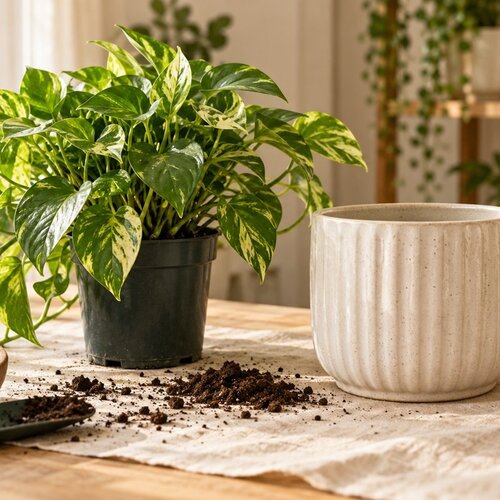
A drooping houseplant is not always thirsty. If its potting mix is still wet, adding more water can make matters worse. Start by finding where the water is collecting and assess the whole plant. Yellow or limp leaves alone do not prove overwatering.
Start with a short inspection
Note when you last watered and check the nursery pot, decorative outer pot and saucer. Do not judge only the dry surface: carefully assess moisture a little deeper without unnecessarily disturbing roots. Compare this with the requirements of your particular plant.
Consider recent changes. A cooler room, lower light or a much bigger pot can change how quickly the mix dries. Take a photograph of the foliage and container so you can compare their condition later.
Your first actions
- Empty standing water from the outer pot or saucer.
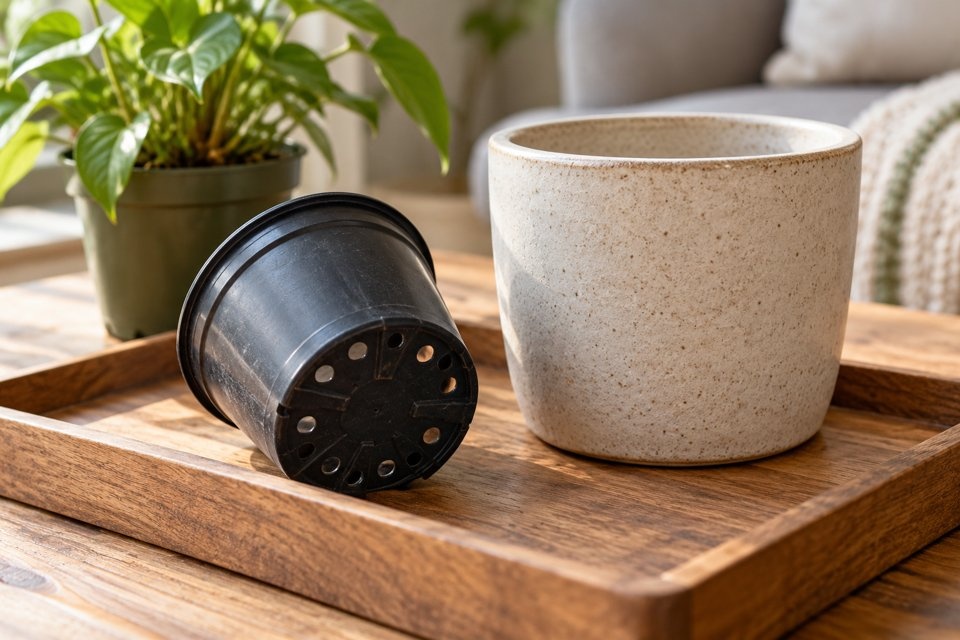
- Check that the inner container has unobstructed drainage holes.
- Do not automatically add more water while the root ball remains wet.
- Keep the plant in light and temperatures appropriate to its species.
- At later checks, note whether the mix is drying and whether symptoms are spreading.
When should you inspect the roots?
If the mix stays wet and the plant continues declining, gently checking the root ball can help. Dark, soft roots need different assessment from firm, healthy roots. If unsure, ask a plant specialist to review clear photographs before undertaking extensive pruning or treatment.
Moving straight into a much larger pot is not a general fix. Match the container and growing medium to the remaining roots and the species. Recovery also has no universal deadline: both the cause and extent of damage vary.
Make your observations comparable
At each check, assess the same pot and similar places in the mix. Note whether it feels wet, moist or drier, whether water remains underneath and whether new symptoms have appeared. This helps prevent one dry patch on top from prompting another unnecessary watering.
For example, imagine watering on Monday and finding drooping leaves on Thursday. If the root ball remains wet, Thursday is not automatically another watering day. Check drainage and position first. If it is dry instead, a different cause or need may be involved. The same leaf posture does not always call for the same action.
What to include when asking for help
Provide clear photographs of the whole plant, foliage, nursery pot and outer container. Include its name, recent watering, the feel of the mix and whether drainage holes are present. Mention changes such as moving or repotting. These details are more useful than simply reporting that the leaves are drooping.
Frequently asked questions
Will one overwatering incident kill my plant?
Not automatically. Drainage, how long the root ball stays wet and the particular species all matter. Inspect the situation first; no outcome can be guaranteed in advance.
Should I put it in strong sun to dry?
Do not move it into conditions unsuitable for its species. More sun is not a universal treatment for wet roots. Check drainage, growing medium and an appropriate position instead.
When can I water again?
This depends on the species and actual moisture. Recheck rather than applying one waiting period to every houseplant. A dry surface does not always reflect the whole root ball.
Will extra fertiliser help?
Fertiliser is not a diagnosis or a general fix for wet roots. Assess water, drainage and root condition first. Then follow species-specific care and the fertiliser instructions where appropriate.


Comments (0)