

Small living room ideas: 6 practical tips
Looking for small living room ideas? Start by keeping everyday routes clear, checking the full dimensions of your furniture and giving loose belongings a permanent home. You can make a room easier to use without replacing everything. Try these six practical changes and choose one to test in your own room.
Small living room ideas: start with the route
Walk from the entrance to the sofa, window and cupboard you use most. Notice where you turn sideways or move something out of the way. Sketch those routes before moving furniture. Include opening doors, drawers, curtains and radiators. A layout only works if you can use the room comfortably in daily life.
A simple test: put a sheet of newspaper where you are considering a new table. Walk around the outline during a normal day. Check it while carrying a laundry basket or serving drinks too. A clear photograph of a room does not show every movement you make in it.
2. Measure depth as well as width
A narrow cupboard can still project a long way into the room. Write down width, depth and height, then check the space needed to open each door or drawer. For delivery, remember your hallway, stairs and tight turns. Product dimensions alone do not prove an item will fit through your home.
Worked example: a room 300 cm wide with a sofa 90 cm deep on one side and a cupboard 40 cm deep opposite leaves 170 cm on paper. Adding a table 60 cm deep leaves 110 cm in total, shared between the spaces in front of and behind it. This is an arithmetic example, not a universal rule for a safe or comfortable walkway.
3. Try a compact side table
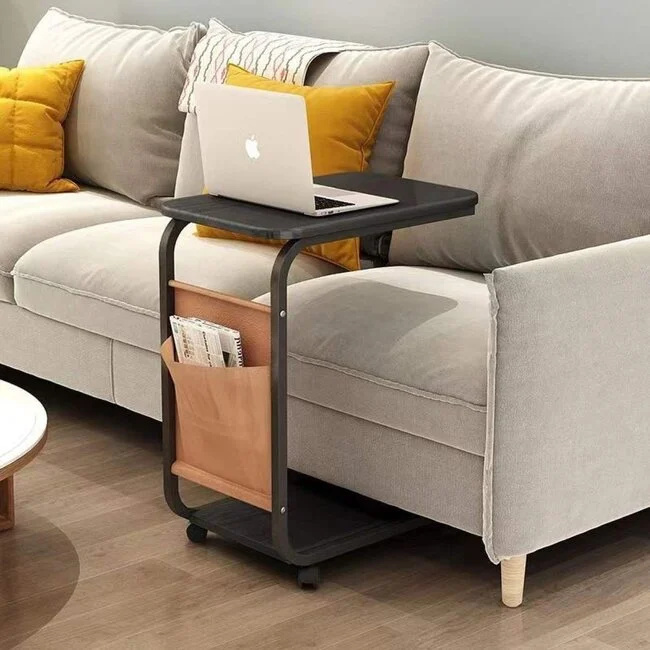
A large coffee table is not the only place for a drink. A small table beside the sofa might meet your needs. Compare its height with the seat and armrest. For a wheeled model, check stability, floor protection and the actual wheel design. Do not assume every small table can support a laptop or be used as a seat.

One example from our range is this 43 × 28 × 63 cm wheeled side table. Compare the footprint with your available space and check the current specifications on the product page. The product link opens a Dutch page.
4. Give everyday objects a permanent place
Remote controls, charging cables and magazines easily spread across a room. Decide where each type belongs. Closed storage can keep things out of view, but it only helps when the compartments suit what you need to store. Measure your belongings before choosing furniture, rather than buying a cupboard and hoping everything fits.

This two-door sideboard illustrates closed storage. The photograph shows the product, not a proposed complete layout for your home. Check all dimensions and assembly instructions; secure furniture to the wall when the manufacturer requires it. The product page is in Dutch.
5. Keep decorative groups simple
You do not need to fill every empty corner. Start with objects you actually enjoy and repeat a few colours around the room. Group a small number of accessories together and leave some surface space clear. Look from the doorway afterwards: does the arrangement feel calm, and can you still reach everything?
Try this with what you already own. Put extra ornaments aside temporarily, then return only the ones you miss. The purpose is a room that works for you, rather than following a fixed rule about how many objects a shelf should contain.
6. Test one change at a time
Move the table or clear one surface first. Live with that change for a few days and notice what becomes easier. Take photographs from the same position to compare layouts. This helps you avoid buying another item that takes up the floor space you were trying to regain.
Match the solution to the problem
| What happens? | What could you test? |
|---|---|
| You keep walking around the table. | Move it beside the sofa temporarily. |
| A cupboard door cannot open fully. | Measure its opening space and move loose items. |
| Remote controls get misplaced. | Give them one permanent drawer or tray. |
| The entrance view looks busy. | Clear one visible surface and compare. |
A smaller table cannot solve an overfilled cupboard. More storage is not useful if it blocks access to the sofa. Identify the everyday action that causes trouble and test a change that addresses it directly.
Watch an example layout
The English-language IKEA video How to decorate and layout a small living room offers visual inspiration. The items shown belong to IKEA, not Koning Bamboe. Compare the room with your own doors, windows and existing furniture rather than copying its dimensions.
Viewing tip: pause at a wide shot and trace the route from the entrance to a seat. Would the same route stay clear in your home? The video opens on YouTube when you choose the link.
Frequently asked questions
Does a small room need light furniture?
No. Consider daylight, proportions and your own taste. A dark side table can work well. Try colour samples and look at the room at different times of day.
Which furniture size suits my room?
There is no single answer. Measure the room and furniture footprint and test routes with doors and drawers open. Compare dimensions with your own plan.
Is a round table always better?
No. Shape is only one factor. A round table may work in one spot while a narrow rectangular one suits the side of a sofa. Test both outlines with paper.
How can I include a workspace?
Check what you need while working and where it goes afterwards. Ensure the chair can move without blocking the main route. Put the laptop and cables away when finished. A side table is not automatically a suitable ergonomic workstation.
Should I replace my furniture immediately?
No. Try moving existing items and organising storage first. Identify what still does not work afterwards. That gives you a clearer reason for any purchase.
Measure, test and choose with purpose
A useful small living room starts with everyday activities. Measure the complete furniture dimensions, test one change at a time and only then decide what to add. Explore our furniture and home accessories on the Dutch shop pages and compare them with your plan.
Products mentioned are examples from our own shop. Specifications, availability and prices can change; the product page takes precedence.


